HYBO Energy HYBO Energy

China Best Renewable Energy Cost Reduction Strategies?

Time:2026-09-23 Author:Sophia
0%

China’s renewable energy expansion has created an unusual cost advantage: scale, dense manufacturing networks, and fast project learning. Yet low equipment prices alone do not guarantee low electricity costs. Grid delays, land constraints, curtailment, financing risks, and uneven maintenance can quietly weaken project returns.

This article examines practical Renewable Energy Cost Reduction Strategies for China’s solar, wind, and storage markets. It considers larger component factories, smarter procurement, local supply chains, digital operation, and longer equipment lifecycles. It also explores how hybrid projects can share substations, land, and forecasting systems. Small savings matter. A stronger inverter warranty, for example, may prevent expensive downtime during a humid summer.

Francesco La Camera, Director-General of the International Renewable Energy Agency, has stated, “Renewables are the cheapest source of new electricity in most markets today.” That statement supports China’s direction, but it should not end the discussion. The cheapest turbine or panel may become costly when transport, replacement parts, grid connection, and balancing are ignored. This is where many strategies remain incomplete.

A reliable approach must connect engineering decisions with finance, policy, and local operating experience. China can reduce costs further through transparent auctions, standardized permitting, stronger transmission planning, and better battery recycling. However, no single formula works everywhere. Desert solar, offshore wind, and distributed rooftop systems face different problems. The analysis should therefore compare proven practices with their limitations, rather than presenting every cost reduction as automatically beneficial.
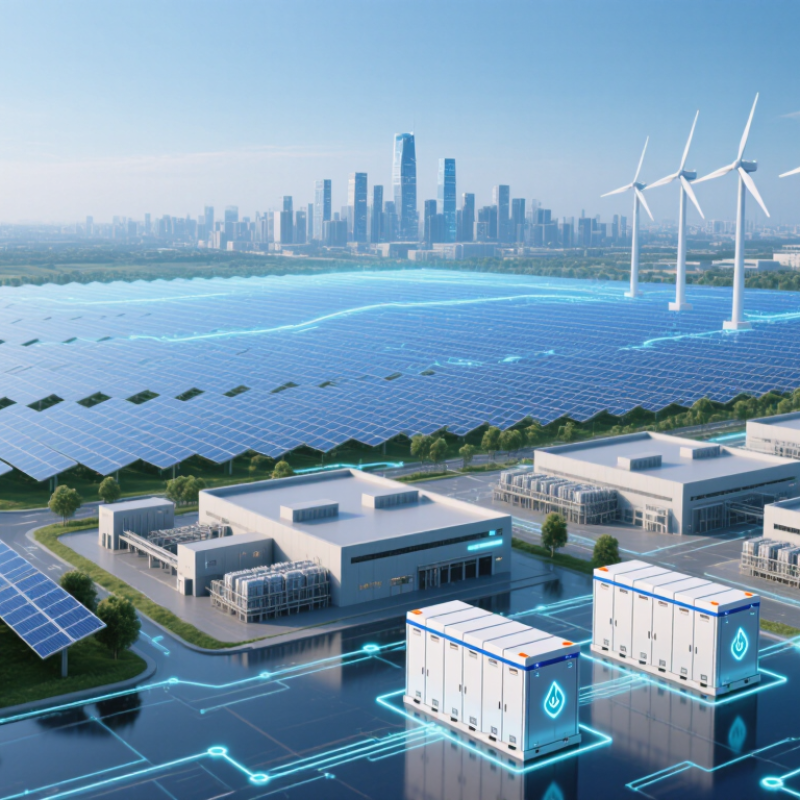
China Best Renewable Energy Cost Reduction Strategies?

China’s Renewable Energy Cost Structure and Key Market Drivers

China’s renewable energy cost structure is changing quickly. Solar and wind projects now benefit from large-scale manufacturing, stronger supply chains, and improved construction experience. Equipment often represents the largest upfront expense, especially for utility-scale solar farms and offshore wind projects. Module, turbine, steel, cable, and battery prices can shift within months.

Financing remains a major market driver. Lower interest rates can improve project economics, while delayed grid connections increase capital costs. Land access, transmission construction, and local permitting also affect final electricity prices. In western regions, abundant sunlight and wind reduce generation costs, but long-distance transmission can add pressure. Curtailment has declined in many areas, yet uneven grid capacity still creates operational risks.

Competitive auctions encourage developers to offer lower prices. This can reduce consumer costs, but an aggressive bid may leave little room for maintenance, storage, or unexpected repairs. That is where the picture becomes less perfect. Developers must measure lifetime costs, not only construction prices. Battery storage, flexible demand, and stronger forecasting systems are becoming more important as renewable output fluctuates. Policy support still matters, although market-based electricity trading is gaining influence. Careful data review remains essential. A low project price does not always mean low system cost.

Scaling Manufacturing and Supply Chains to Lower Project Costs

China Best Renewable Energy Cost Reduction Strategies?

Scaling manufacturing and supply chains can lower renewable energy project costs more reliably than isolated equipment discounts. Manufacturers should standardize frames, inverters, storage enclosures, and cable assemblies where site conditions allow. Shared designs reduce tooling expenses and shorten factory testing time. Local production also cuts shipping distance, customs delays, and damage risks. However, low prices can hide weak quality controls. A cracked connector or poorly sealed cabinet may create expensive delays during installation.

Project developers need suppliers with documented testing, traceable materials, and clear replacement procedures. Bulk purchasing helps, but only when delivery schedules match construction phases. Regional warehouses can hold high-risk spare parts, such as fuses, sensors, and communication modules. Digital forecasting is useful here. It connects project demand with factory capacity and transport availability.

Tips: Compare total delivered cost, not the factory quotation. Audit sample batches before large orders. Require measurable quality targets and realistic warranty processes. Keep two qualified supply options for critical components.

This approach is not flawless. Over-standardization may ignore local weather, terrain, or grid requirements. A design that works near a dry inland site may fail in a humid coastal environment. Careful engineering review remains essential. Cheap equipment is not cheap when replacement work stops a project for weeks.

China Renewable Energy Cost Reduction Strategies

Global weighted-average levelized cost of electricity, 2010 vs. 2023

Large-scale manufacturing, localized component supply, standardized project design, and stronger logistics can reduce renewable-energy project costs. From 2010 to 2023, the global weighted-average cost of utility-scale solar photovoltaic power fell by about 88%, while onshore wind declined by about 70%, demonstrating the impact of industrial scale and supply-chain efficiency.

Source: International Renewable Energy Agency (IRENA), Renewable Power Generation Costs 2023. Costs are shown in US dollars per kilowatt-hour.

Advancing Grid Integration, Storage, and Energy Management

China’s most effective renewable energy cost reductions increasingly depend on integration, not cheaper panels alone. In coastal provinces, midday solar generation can exceed local demand, causing curtailment and wasted electricity. Better forecasting connects weather data with hourly load patterns. Grid operators can schedule flexible industrial loads during surplus periods. This approach requires accurate meters, clear dispatch rules, and trained operators. It is practical work. It is not always smooth.

Energy storage adds flexibility when designed around actual grid needs. Short-duration batteries can absorb midday solar and release power during evening peaks. Pumped storage can support longer balancing cycles where suitable geography exists. However, storage should not be installed only because capacity targets look attractive. Engineers need to compare cycle life, efficiency, safety systems, land use, and replacement costs. A battery that performs poorly after several years can weaken the entire business case.

Energy management systems can connect renewable generation, storage, forecasts, and industrial demand through one operating platform. Real-time alarms help staff detect abnormal temperature, voltage, or battery behavior before failures grow. Independent performance testing also improves reliability and public confidence. Yet many projects still underestimate maintenance skills and communication standards. That gap deserves more attention. Cost reduction is incomplete when operators lack clear procedures, spare parts, or realistic emergency drills. Data should guide decisions, but experienced teams must still question unusual results.

Using Policy Incentives, Competitive Markets, and Financial Tools

China Best Renewable Energy Cost Reduction Strategies?
Using Policy Incentives, Competitive Markets, and Financial Tools

China can reduce renewable energy costs by making support predictable, competition transparent, and capital easier to access. In project reviews, developers often identify uncertainty as a hidden expense. A delayed grid connection can leave turbines or panels idle for months. Clear auction rules, stable tax treatment, and faster permitting can reduce that risk. Incentives should reward delivered electricity, not only installed capacity. This distinction matters.

Competitive markets can lower equipment and construction costs when bids are open and technically comparable. Public tenders should publish scoring rules, grid conditions, and contract terms before bidding. Independent audits can discourage unrealistic prices that later produce delays or weak maintenance. Regional power markets can also help projects sell electricity when local demand changes. Price competition is useful. It is not sufficient.

Financial tools can address the high upfront cost of solar, wind, storage, and transmission. Green bonds, credit guarantees, and longer-term loans can improve cash flow during construction. Blended finance may support projects in poorer regions, where commercial returns seem uncertain. Yet cheap money can hide weak project design. Lenders should examine resource quality, curtailment records, equipment warranties, and recycling plans. A practical framework needs room for correction, because forecasts sometimes fail and policy signals can change.

China Best Renewable Energy Cost Reduction Strategies? - Using Policy Incentives, Competitive Markets, and Financial Tools

National reference indicators and practical cost-reduction mechanisms
Strategy Area Policy or Market Tool Real National Reference Data How It Reduces Cost Recommended Application Source and Period
Policy Incentives Renewable-energy development targets and local implementation plans China’s renewable-energy installed capacity reached approximately 1,516 GW at the end of 2023, representing about 52.2% of total installed power capacity. Long-term policy targets improve project visibility, support supply-chain scale, and reduce development and financing risk premiums. Prioritize regions with clear annual capacity targets, grid-connection plans, and transparent land-use procedures. National Energy Administration, 2023
Policy Incentives Renewable electricity consumption responsibility mechanism China uses provincial renewable-electricity consumption responsibility weights to encourage electricity retailers and large users to purchase renewable power. Creates demand for renewable electricity certificates and green-power contracts, improving project revenue predictability. Match projects with provinces and large electricity consumers that have stronger renewable-consumption requirements. National Energy Administration policy framework, ongoing
Policy Incentives Value-added tax preference for qualifying renewable electricity generation Qualifying wind-power electricity generation can receive a 50% immediate VAT refund under the applicable tax rules. Improves operating cash flow and lowers the effective tax burden during the project’s operating period. Include tax eligibility, documentation requirements, and refund timing in the project financial model. State Taxation Administration, applicable tax guidance
Competitive Markets Market-based electricity trading Market-oriented electricity transactions reached approximately 5.67 trillion kWh in 2023, equal to about 61.4% of total electricity consumption. Competitive procurement can lower power purchase costs, reveal regional price differences, and improve dispatch efficiency. Use competitive tenders, bilateral contracts, and medium- to long-term market transactions instead of relying only on administrative pricing. National Energy Administration, 2023
Competitive Markets Green-power trading and renewable-energy certificates China’s green-power trading market recorded approximately 61.3 billion kWh of transactions in 2023. Adds an environmental-value revenue stream and enables buyers to meet renewable-consumption and decarbonization goals. Separate electricity revenue from certificate or environmental-value revenue and avoid double counting. National Energy Administration, 2023
Competitive Markets Competitive allocation and auction-style procurement Centralized wind and solar projects have increasingly been developed through market-oriented allocation, with project selection linked to price, grid access, land, and local economic conditions. Transparent competition can reduce excessive development margins and encourage lower construction and operating costs. Evaluate bids using full-life-cycle cost, curtailment risk, grid charges, storage obligations, and financing assumptions. National Energy Administration and provincial implementation rules, ongoing
Financial Tools Green loans and sustainability-linked financing Outstanding green loans in China’s domestic and foreign-currency banking system were approximately RMB 30.08 trillion at the end of 2023, increasing about 36.5% year on year. Broader green-finance supply can improve refinancing options and reduce weighted average cost of capital for eligible projects. Prepare verified environmental-performance data and use covenant structures linked to measurable energy or emissions targets. People’s Bank of China, Q4 2023
Financial Tools Green bonds and project bonds China maintains dedicated green-bond standards and an official project-catalogue framework covering renewable energy, grid efficiency, storage, and related low-carbon infrastructure. Longer-tenor bond funding can reduce refinancing pressure and better match debt repayment with asset cash flows. Use bond proceeds for clearly eligible assets and disclose allocation, impact, and post-issuance performance. People’s Bank of China and National Financial Regulatory Administration, ongoing
Financial Tools Policy-backed risk sharing and credit enhancement China’s green-finance framework includes central-bank relending support and local guarantee mechanisms for eligible low-carbon activities. Partial risk sharing can reduce lender risk premiums, collateral requirements, and early-stage financing barriers. Combine guarantees, insurance, and subordinated capital only where they lower total project risk rather than simply increasing leverage. People’s Bank of China and local financial-policy programs, ongoing
System Efficiency Grid flexibility, energy storage, and demand response China’s renewable generation reached approximately 2.95 trillion kWh in 2023, accounting for about 31.6% of total electricity consumption. Better flexibility reduces curtailment, improves asset utilization, and lowers the need for costly backup capacity. Model storage duration, transmission constraints, time-of-use prices, and demand-response revenues together with generation costs. National Energy Administration, 2023
Carbon-Market Alignment National carbon-emissions trading system China’s national carbon market initially covered the power sector and approximately 4.5 billion tonnes of annual CO₂ emissions. Carbon-cost exposure increases the relative economic value of low-emission electricity and can strengthen demand for renewable power. Include carbon-price sensitivity, emissions accounting, and compliance demand in long-term power-market scenarios. Ministry of Ecology and Environment, national ETS framework
Data note: Figures are national-level reference indicators, mainly from 2023 official Chinese statistics and policy frameworks. They are not company-specific data. Actual project savings depend on location, grid connection, curtailment, financing terms, tax eligibility, storage requirements, and power-market conditions.

Improving Project Efficiency Through Technology and Local Partnerships

Reducing renewable energy costs in China depends less on cheaper panels than on better project execution. Digital surveying, satellite mapping, and drone inspections can shorten site assessment and identify weak terrain early. A unified data platform also connects design, procurement, construction, and maintenance teams. According to IRENA’s Renewable Power Generation Costs in 2023, 81% of new utility-scale renewable projects delivered lower electricity costs than fossil-fuel alternatives. Efficiency still decides whether a project reaches that potential.

Local partnerships make technology more practical. Regional engineering firms understand grid conditions, land procedures, weather patterns, and community concerns. Their knowledge can prevent costly redesigns, especially in remote areas. The IEA’s Renewables 2024 report expects China to provide nearly 60% of global renewable capacity additions through 2030, increasing pressure on local grids and project teams. Shared planning with local utilities can improve connection schedules and reduce idle equipment.

Small details matter. A maintenance team using digital alerts can detect abnormal inverter temperatures before a failure spreads. Local technicians can respond faster when roads, language, or weather disrupt access. Yet this model is not flawless. Poor data standards may create expensive software silos, while local cooperation can become symbolic without clear responsibilities. Project owners should measure response time, construction rework, grid delays, and actual energy yield. Cheap technology is not always useful technology. The uncomfortable lesson is that partnership quality often matters more than another percentage point of equipment efficiency.

FAQS

What are the main costs in China’s renewable energy projects?

Equipment is often the largest upfront expense. Solar modules, turbines, steel, cables, and batteries can change price within months. Construction, land, transmission, and financing also affect the final electricity cost.

How do interest rates affect renewable energy projects?

Lower interest rates can improve project economics. Higher rates increase construction expenses and repayment pressure. Delayed grid connections may leave panels or turbines idle while capital costs continue.

Why can western regions produce cheaper renewable electricity?

Strong sunlight and wind can reduce generation costs. However, long-distance transmission adds expense. Uneven grid capacity may also create curtailment and operational risks.

Can competitive auctions always reduce electricity prices?

Open auctions can lower equipment and construction prices. Aggressive bids may leave too little money for maintenance, storage, or repairs. A low bid is not always a low system cost.

What should public tenders disclose before bidding?

Tender documents should explain scoring rules, grid conditions, and contract terms. Technical comparisons must remain clear. Otherwise, unrealistic prices may create delays or weak maintenance.

Which technologies can improve renewable project efficiency?

Digital surveys, satellite mapping, and drone inspections can identify weak terrain early. Digital alerts may detect unusual inverter heat before failure. Cheap technology is not always useful technology.

How can local partnerships reduce project costs?

Local engineering teams understand land procedures, weather, roads, and grid conditions. They can prevent costly redesigns and respond faster to equipment problems. Cooperation needs clear responsibilities.

Why are storage and flexible demand becoming more important?

Renewable output changes with sunlight and wind. Batteries, flexible demand, and better forecasting can balance supply. Storage adds cost, though. The design may still be imperfect.

Which financial tools can support renewable development?

Green bonds, credit guarantees, and longer-term loans can improve construction cash flow. Blended finance may help projects in poorer regions. Cheap money cannot fix weak project design.

What should lenders and developers review before approval?

They should examine resource quality, curtailment records, equipment warranties, recycling plans, and grid connection schedules. They should also review actual energy yield. Forecasts sometimes fail.

Conclusion

China’s renewable energy sector can achieve further cost reductions by addressing the full project value chain, from equipment manufacturing and transportation to construction, grid connection, and long-term operations. Renewable Energy Cost Reduction Strategies should begin with stronger domestic supply chains, standardized components, efficient production, and regional cooperation that reduce material, labor, and logistics expenses. At the same time, improved forecasting, smart energy management, flexible grids, and cost-effective storage can increase renewable power utilization and reduce curtailment.

Policy incentives, transparent market competition, and accessible financing can also lower investment risks and improve project affordability. Developers can enhance performance through advanced technologies, streamlined planning, preventive maintenance, and data-based operational decisions. Partnerships with local governments, communities, research institutions, and service providers can further improve land use, permitting, workforce development, and project execution. Together, these measures can support more reliable, efficient, and economically sustainable renewable energy growth in China.

Sophia

Sophia

Sophia is a dedicated marketing professional with an exceptional depth of knowledge about her company's products and services. With a keen understanding of market trends and customer needs, she crafts insightful blog posts that not only inform but also engage readers, enriching the company’s online......