HYBO Energy
HYBO Energy
HYBO Energy
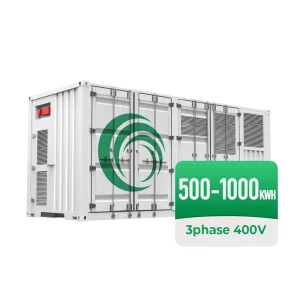
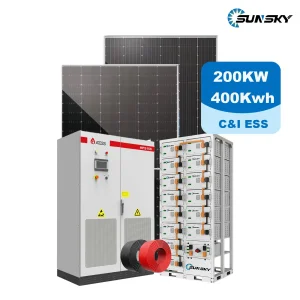
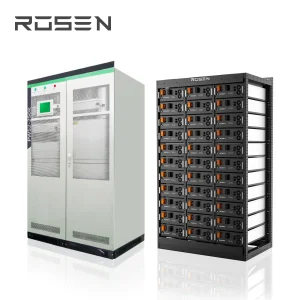
Explore our factory-engineered energy storage systems designed for utility-scale microgrids, commercial peak shaving, high-voltage battery management, and versatile mobile power deployment.
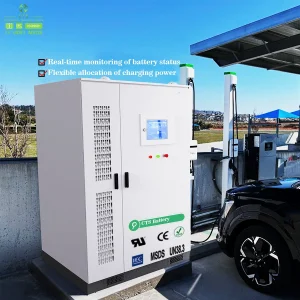
Analyzing global procurement trends, grid decarbonization mandates, and the integration of Thermal Energy Storage (TES) with high-voltage Battery Energy Storage Systems (BESS) for C&I microgrids.
As energy infrastructure worldwide pivots toward decarbonization, global procurement directors, EPC contractors, and industrial facility managers face complex grid instability and surging peak-tariff charges. Modern manufacturing facilities specializing in OEM/ODM Thermal Energy Storage (TES) and Lithium Battery Systems are no longer merely assembling battery enclosures; they are engineered innovation hubs developing multidimensional thermal management, phase-change thermal retention, and AI-driven energy optimization software.
Thermal energy storage technologies—encompassing molten salt heat exchange, phase change materials (PCM), sensible heat reservoirs, and liquid-chilled microgrid integration—serve as the foundation for modern enterprise energy resilience. When combined with advanced lithium iron phosphate (LiFePO4) chemistry and smart high-voltage (300V to 1500V) Battery Management Systems (BMS), industrial operators unlock un-parallelled peak shaving, load shifting, microgrid stability, and zero-downtime backup during utility blackouts.
Proprietary BMS algorithms, certified global safety standards, and end-to-end custom production capabilities.
Changzhou HYBO New Energy Co., Ltd. specializes in the high-precision production, structural design, thermal safety engineering, and global sales of lithium battery energy storage products. Starting from specialized residential energy storage, the enterprise has rapidly expanded its industrial footprint into small commercial energy storage networks, containerized liquid-cooled utility installations, and portable power stations.
Relying on our company's proprietary advanced Battery Management System (BMS) and self-developed patented thermal run-away isolation technology, all energy storage architectures rigorously comply with international regulatory frameworks, having earned prestiges certifications including TUV, IEC, CEC, CE, and UN38.3.
From thermal simulation modeling, 3D CAD enclosure design, and high-voltage circuit schematic design to customized firmware programming, we offer end-to-end ODM engineering tailored to enterprise OEM specifications.
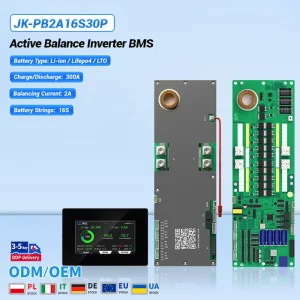
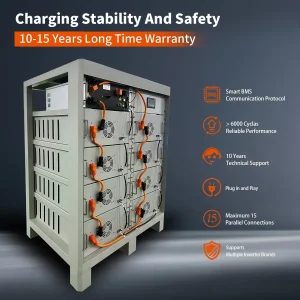
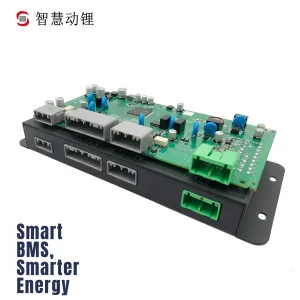
Self-developed active balancing smart BMS supporting up to 1500V high-voltage platforms, real-time internal resistance monitoring, thermal anomaly detection, and RS485/CAN/Ethernet IoT integration.
100% factory stress testing including thermal shock exposure, vibration testing, high-current discharge verification, salt spray corrosion testing, and overcharge protection validation.
Comparative analysis of liquid cooling vs. air cooling thermal dissipation, phase-change integration, and high-voltage grid conversion efficiency.
| Architecture Metric | Air-Cooled BESS Standard | Advanced Liquid-Cooled BESS (233kWh+) | Phase-Change Thermal (TES) Hybrid |
|---|---|---|---|
| Thermal Uniformity (ΔT) | ≤ 5.0°C across module | ≤ 2.5°C cell-to-cell gradient | ≤ 1.8°C thermal stabilization |
| Parasitic Power Draw | High (Constant fan load) | Low (Variable frequency pump) | Ultra-Low (Passive phase change + pump) |
| Volumetric Energy Density | Medium (~75 kWh/m³) | High (~140 kWh/m³) | Maximized (~180 kWh/m³ total thermal) |
| Battery Life Cycle Extension | Baseline (~4,000 cycles) | Extended (+35% to 8,000+ cycles) | Maximum (+50% degradation protection) |
| Thermal Runaway Containment | Passive barrier insulation | Active coolant deluge + NFPA 69 gas | Latent heat absorption phase barriers |
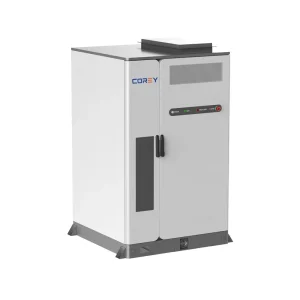
The future of commercial energy storage lies in the convergence of electrochemical storage and phase-change thermal heat sinks. By dissipating thermal spikes during rapid 1C to 2C rate charging, our factory-engineered liquid-cooled containers (such as the 233kWh liquid-cooled storage cabinet) prevent localized hot-spot formation. This precise thermal regulation preserves lithium cell health, prevents premature capacity loss, and eliminates safety risks in high-ambient temperature regions like the Middle East and Australia.
Delivering reliable clean energy infrastructure across the European Union, UK, South Africa, Southeast Asia, Australia, New Zealand, Japan, and the Middle East.
Our products have been exported to the European Union, the United Kingdom, South Africa, Southeast Asia, Asia, Australia, New Zealand, Japan, the Middle East and other key regions, consistently bringing enterprise clients exceptional energy reliability and tailored technical solutions.

Before procuring industrial microgrids or portable power units, enterprise buyers and system integrators should perform an in-depth energy audit: calculate total connected appliance wattages, peak surge currents (VA), continuous load durations, and anticipated solar PV replenishment capacity. Answering these engineering questions ensures optimal inverter sizing, appropriate C-rate selection, and maximum ROI.
"Let us enjoy life and business operations more comfortably. With high-performance thermal and battery energy storage, issues regarding unexpected grid blackouts and remote off-grid operations are completely solved."
Assuring flawless integration into regional utility grids across North America, Europe, Asia-Pacific, and Africa.
Strict adherence to EN 62619, CE-LVD, CE-EMC, and UKCA certifications. Fully compatible with EU grid-connection standards including G99 (UK) and VDE-AR-N 4105 (Germany) for seamless solar-plus-storage synchronization.
Engineered to pass UL 1973, UL 9540, and UL 9540A thermal runaway propagation testing. Registered under the California Energy Commission (CEC) directory for high-efficiency inverter and battery pairings.
Specialized OEM thermal isolation enclosures designed for high-humidity and extreme heat environments across South Africa, the Middle East, Southeast Asia, Australia, and New Zealand.
Detailed insights into thermal energy storage technology, factory manufacturing lead times, customization options, and microgrid engineering.
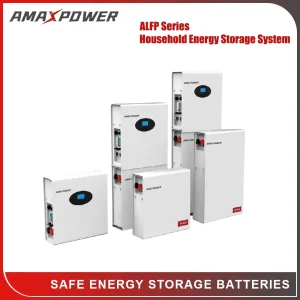
Explore our utility-scale battery containers, active balancing BMS controllers, power quality monitoring devices, and high-capacity LiFePO4 wall systems.