HYBO Energy
HYBO Energy
HYBO Energy
Engineered to meet European safety norms (IEC 62619, TUV) and configured for high-performance integration with standard European inverters.
Portugal is positioning itself as a leader in Europe's clean energy transition. Guided by the Plano Nacional Energia e Clima (PNEC 2030), the country aims to achieve 85% of its electricity generation from renewable sources by 2030. In Lisbon, this structural shift is creating unprecedented demand for resilient battery systems and intelligent Battery Management Systems (BMS). The local grid must handle highly volatile solar energy inputs, making reliable utility-scale and commercial energy storage systems critical for stabilization.
Lisbon’s historic core, coupled with modern high-density technology parks in Oeiras and Sintra, presents a diverse electrical landscape. High solar irradiance in the metropolitan region makes commercial and industrial (C&I) solar self-consumption projects highly profitable. To prevent grid stress and manage peak loading, local regulators are encouraging the integration of localized BESS (Battery Energy Storage Systems) supported by multi-tiered, safety-focused BMS architectures that prevent thermal runaway and optimize cell balancing in real time.
Additionally, Lisbon's commitment to low-emission transit zones has led to rapid growth in urban micro-mobility and commercial electric vehicle fleets. To support this growth, vehicle operators require highly efficient BMS configurations that can manage heavy start-stop cycles, optimize cell degradation rates, and handle the challenging topographies of Lisbon’s historic hills.
Our systems comply with European standards, including EN 50549-1/2, IEC 62619, and the national grid codes enforced by E-Redes, ensuring smooth and safe grid connections throughout Portugal.
Designed for the hot dry summers of the Iberian Peninsula, our advanced thermal management systems protect battery cells from degradation during peak heat waves.
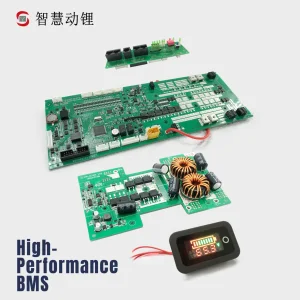
The shift toward solid-state chemistry and high-voltage, high-capacity installations requires sophisticated, software-driven management layers.
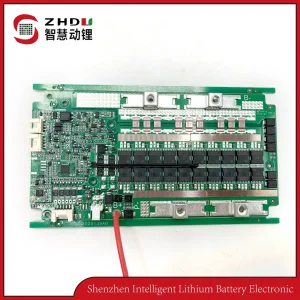
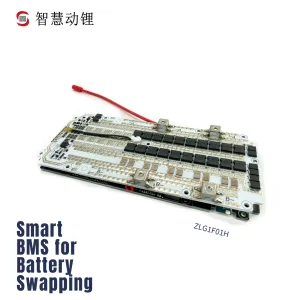
Unlike standard passive shunts that waste excess energy as heat, our BMS designs actively redistribute energy from higher-voltage cells to lower-voltage ones. This minimizes thermal stress, improves energy efficiency, and extends battery pack lifespans by up to 30%.
Using advanced electrochemical model-based algorithms, our systems calculate State of Charge (SoC), State of Health (SoH), and State of Power (SoP) in real time. This ensures stable power output and helps prevent unexpected over-discharge scenarios.
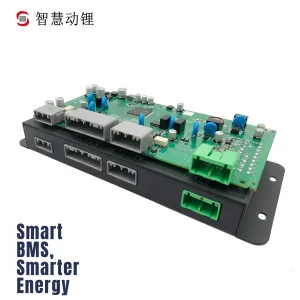
Our systems feature seamless communication interfaces, including CAN bus, Modbus, and RS485 protocols. These allow for integration with mainstream European industrial PLC networks, hybrid inverters, and cloud-based energy management portals.
Changzhou HYBO New Energy Co., Ltd. specializes in the production, design, manufacturing, and sales of lithium battery energy storage products. Starting with residential energy storage, we have expanded our expertise into small industrial, commercial, and portable energy storage sectors. We focus on developing and producing lithium-ion batteries tailored for residential systems as well as small-scale industrial and commercial storage networks.
Relying on our proprietary advanced battery management systems (BMS) and patented technologies, our products have passed rigorous testing to obtain TUV, IEC, CEC, and other major international certifications. This guarantees compliance with global safety, efficiency, and environmental requirements.
By controlling the entire production process—from cell selection and BMS programming to final validation testing—we ensure that every energy storage unit delivered to Lisbon and the broader European market meets high standards of reliability.
How our advanced manufacturing facilities in Jiangsu Province deliver technological advantages and cost efficiencies to global energy projects.
The Yangtze River Delta region is the world's largest lithium-ion battery manufacturing cluster. Located in Changzhou, our production facilities benefit from a complete upstream supply chain. This proximity allows us to source raw materials, semiconductor components, and battery cells with minimal transit delay, helping us maintain stable production timelines.
Our factory utilizes advanced automated optical inspection (AOI) technology, robotic dual-pulse laser welding, and automated end-of-line (EOL) testing. Every BMS undergoes environmental stress testing, high-temperature soak cycles, and full charge-discharge loop validation. This level of process control minimizes production variance and ensures high safety levels for residential and industrial applications.
For our clients in Lisbon and Portugal, this translates to competitive pricing, direct access to advanced engineering revisions, and stable lead times. We also provide direct container shipping options from Shanghai and Ningbo ports to the Port of Lisbon.
| Manufacturing Phase | Equipment & Standards | Quality Impact |
|---|---|---|
| BMS SMT Assembly | High-precision Fuji placement machines | Ensures precise component placement and prevents circuit anomalies. |
| Cell Matching | Automated voltage, resistance, and capacity sorting | Guarantees uniform performance across the pack, extending cycle life. |
| Protection Testing | Simulated short-circuit and overcharge fault injection | Validates functional safety parameters before final system shipment. |
| Final Validation | 100% full thermal imaging and load-burn cycle tests | Ensures stable thermal performance during real-world operations. |
Our energy storage systems and BMS solutions are deployed globally to support regional energy grids and commercial enterprises.
Our products have been exported to the European Union, the United Kingdom, South Africa, Southeast Asia, Asia, Australia, New Zealand, Japan, and the Middle East. We provide local project developers and industrial distributors with customized engineering support, clear documentation, and reliable after-sales services.

Providing reliable power solutions across commercial, residential, and outdoor environments.
Before acquiring a portable power station or home storage system, evaluate your total load requirements: calculate the combined starting and running wattage of your appliances, determine your required runtime, and assess local solar conditions for recharging. This helps size the battery and define the necessary inverter outputs. Integrating reliable power storage can help minimize the risks and costs associated with grid interruptions.
Our comprehensive portfolio, designed to meet the technical standards of energy projects in Portugal and Europe.
Expert technical insights regarding integration, design parameters, and safety standards for the Portuguese energy sector.
Passive balancing dissipates excess energy from high-voltage cells as heat through resistors, which can increase thermal load inside the enclosure. Active balancing redistributes this charge to lower-voltage cells, reducing heat generation, optimizing efficiency, and helping to prevent localized cell aging.
High-voltage battery management systems utilize isolated measurement circuits, redundant solid-state contactors, and high-voltage interlocks (HVIL). They monitor insulation resistance (residual current detection) and support dual CAN/Modbus communication networks to isolate battery racks if a ground fault occurs.
Yes. Our systems are certified under standard European norms, including IEC 62619, CE, and TUV. This simplifies compliance with local connection requirements established by E-Redes for low and medium-voltage grid integration.
Yes, our battery management software supports multiple CAN bus and Modbus register maps, allowing for integration with common European inverter brands such as SMA, Fronius, Victron, and Sungrow.
Whether you are planning a utility-scale deployment in Portugal, configuring micro-mobility packs, or sourcing home storage solutions, our engineering team can help.
Send Inquiry Now