HYBO Energy
HYBO Energy
HYBO Energy
High-efficiency systems designed to withstand local environmental profiles and optimize regional supply chains.
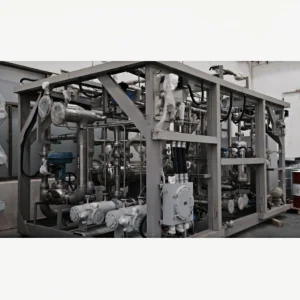
Technical analysis of green and blue hydrogen deployment scenarios in tropical environments and isolated microgrid networks.
Equatorial Guinea is positioning itself as a central hub for energy transition in Central Africa. Historically anchored in oil and liquefied natural gas (LNG) production at Punta Europa on Bioko Island, the country faces unique structural and environmental challenges. To satisfy both international decarbonization demands and national environmental targets defined under the "Agenda Nacional de Desarrollo Guinea Ecuatorial 2035", localized clean energy systems are becoming imperative.
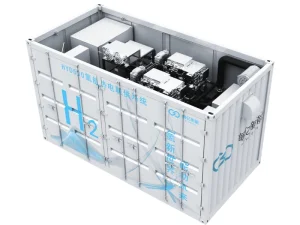
In regions like Malabo and Bata, grid stability is crucial for sustaining heavy industry, storage infrastructure, and remote extraction projects. The introduction of containerized green hydrogen systems, combined with solar photovoltaic (PV) setups, offers a viable pathway to eliminate dependency on heavy diesel generators. The local high humidity and coastal atmospheric salinity require components engineered for corrosion resistance, using high-grade C5-M marine-specification coatings and advanced cooling thermal-management architectures to prevent efficiency degradation under high ambient operating temperatures.
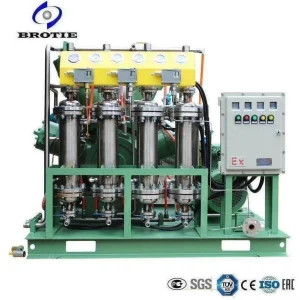
International EPC (Engineering, Procurement, and Construction) companies and industrial project developers demand rigorous compliance pathways for hydrogen hardware. When sourcing hydrogen compression, purification, or generation modules, strict adherence to international safety metrics is non-negotiable. Quality assurances like CE, TUV, IEC, and ASME certifications ensure that high-pressure storage and gas separation technologies conform to critical operating safety margins.
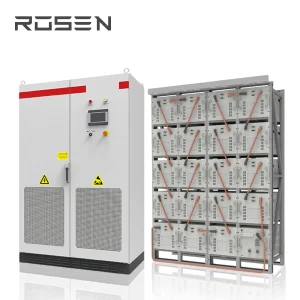
Changzhou HYBO New Energy Co., Ltd. addresses these requirements by integrating state-of-the-art Battery Management Systems (BMS) with high-efficiency energy storage arrays, providing the power quality required to run sensitive proton exchange membrane (PEM) electrolyzers and compression cycles. Global procurement mandates seek modularity, ease of maritime shipment, plug-and-play installation kits, and remote telemetry access to ensure system performance metrics are monitored continuously from international headquarters.
For isolated microgrids and base load management in Equatorial Guinea, wind and solar power suffer from intermittency. The triad system—comprising Solar PV, Lithium-Ion Battery Storage (BESS), and Hydrogen Fuel Cell / Storage technology—resolves the critical limitations of short-duration battery reserves.
Under this configuration, solar power meets daytime electrical demand and recharges the high-performance lithium batteries. Excess generation is routed to an Alkaline or PEM water electrolyzer to yield high-purity hydrogen, stored long-term in compression tanks. During sustained low-solar conditions, this stored hydrogen is run back through a Fuel Cell or CHP (Combined Heat and Power) system to feed the load, creating a reliable, year-round microgrid solution tailored to Equatorial Guinea's remote mining, processing, and agricultural centers.
Changzhou HYBO New Energy Co., Ltd. specializes in the production, design, manufacturing, and sales of high-performance lithium battery energy storage systems and integrated renewable energy infrastructures. Starting from household energy storage solutions, we have expanded into containerized commercial and industrial (C&I) installations, portable power stations, and integrated green hydrogen systems.
Our products leverage proprietary advanced Battery Management Systems (BMS) and patented thermal mitigation technologies, earning international certifications from leading compliance bodies such as TUV, IEC, and CEC. We provide dependable off-grid components engineered to bridge the energy transition gaps of developing industrial markets worldwide.
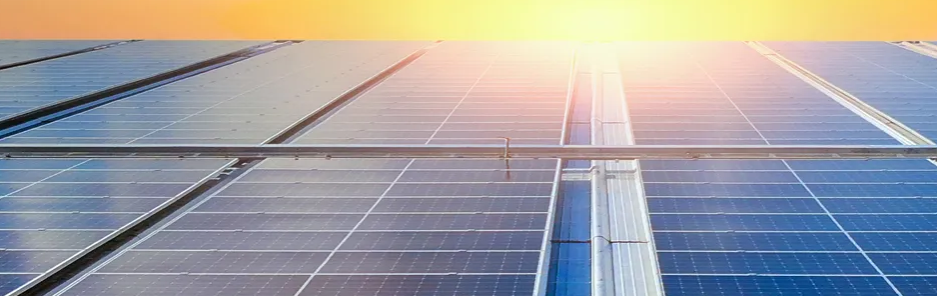
Delivering robust clean energy setups across strict regulatory landscapes worldwide.
Our energy storage, fuel cells, and hydrogen production systems are deployed across the European Union, the United Kingdom, South Africa, Southeast Asia, Australia, New Zealand, Japan, and the Middle East. We provide local and international engineering partnerships with the reliable hardware configurations needed to meet decarbonization guidelines, grid integration rules, and safety parameters.

Analyzing critical use cases for off-grid operations and industrial backup systems.
A portable power station or small-scale battery system acts as a key building block for storing energy during field operations, serving as the first step toward building a decentralized microgrid in remote locations.
Enables remote equipment operation for infrastructure installation, maintenance, off-shore mining, agricultural extraction, community clinic support, field medical hubs, and remote site offices.
Ensures continuous operation of essential home healthcare equipment, security networks, server backup drives, and lighting during unplanned utility grid disruptions.
Provides plug-and-play energy support for camping, off-grid research stations, RV life, overlanding transport, marine excursions, and environmental monitoring systems.
Prior to procuring a clean energy system or portable power stack, calculate the daily peak power consumption (kW), total continuous energy requirement (kWh), estimated duration of off-grid backup cycles, and the average regional peak sun hours. This data ensures correct sizing of the PV array, battery capacity, and integrated hydrogen purification or fuel cell modules, helping to avoid issues from over-sizing or under-sizing your equipment.
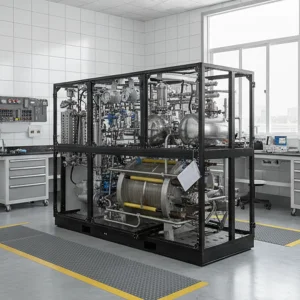
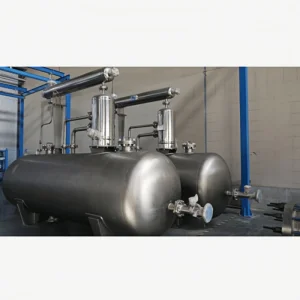
Explore our full line of specialized hydrogen production, conditioning, and storage systems.
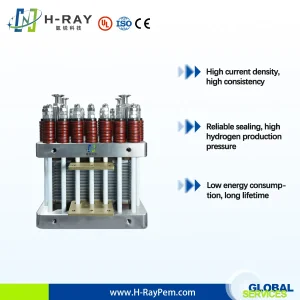
Addressing common technical and regulatory questions for deploying hydrogen systems in Equatorial Guinea.
Our containerized systems feature dual-loop HVAC setups and IP65-rated enclosures to protect against ambient temperatures up to 45°C and relative humidity levels up to 95%. Air-intake ports use multi-stage filtration to prevent saline ingress, which is critical for coastal deployment in locations like Bata or Malabo.
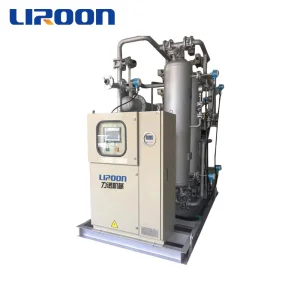
All purification systems, including our PSA (Pressure Swing Adsorption) recovery loops, are designed in compliance with ASME Section VIII codes for pressure vessels, alongside CE and TUV certifications. Electrical systems follow IEC 60079 series guidelines to ensure explosion-proof safety in gas-hazard environments.
Our proprietary BMS dynamically balances battery state-of-charge (SOC) with the energy consumption of the electrolyzer. When battery reserves are filled, excess solar power is routed to hydrogen conversion, ensuring minimal curtailment and extending battery life cycles.
Standard systems are modularized into standard ISO dry containers for direct ocean freight dispatch to the ports of Malabo (Bioko Island) or Bata. Production lead times range from 12 to 16 weeks, followed by ocean transit, with custom-engineered units built to match your on-site engineering drawings.
Connect with our expert team of engineers to receive technical drawings, customized layouts, and cost estimates for your clean energy project.
Send Inquiry Now