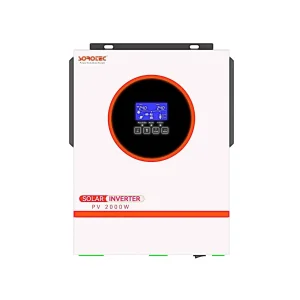
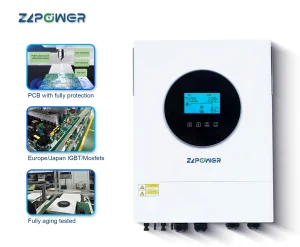
HYBO Energy
High-efficiency pure sine wave & hybrid rack systems engineered for Chipata's heavy commercial and telecom microgrids.
Chipata, the administrative and commercial capital of Zambia's Eastern Province, serves as an essential trade crossroad bridging Lusaka with the Republic of Malawi via the Mchinji border post. Located along the Nacala Logistics Corridor, Chipata has experienced rapid industrialization across agricultural processing (cotton ginning, groundnut oil extraction, maize milling, tobacco leaf curing), light manufacturing, telecommunications expansion, and commercial hospitality. However, this economic trajectory faces severe operational headwinds caused by regional utility grid volatility, utility load-shedding schedules extending up to 14–18 hours daily, and legacy distribution network bottlenecks.
To mitigate grid vulnerability and prevent catastrophic operational downtime in agricultural processing facilities and commercial hubs, enterprise procurement directors are increasingly moving away from fuel-expensive diesel generators toward modular power inverter systems, hybrid solar energy storage systems (ESS), and industrial pure sine wave power converters. Sourcing power inverters directly from tier-1 factories and specialized export partners provides Chipata enterprise buyers with custom DC-AC conversion topologies optimized for high ambient temperatures, dusty seasonal harmattan conditions, and heavy inductive motor start loads.
Furthermore, Chipata's position as a cross-border logistics nexus requires localized inventory security. Power inverters imported into Chipata must not only satisfy national electrical regulations overseen by the Zambia Bureau of Standards (ZABS) and the Zambia Revenue Authority (ZRA), but also maintain technical flexibility to handle wide input voltage swings (ranging from 160VAC to 275VAC) common to rural African grid edge feeders.
Rigorous electrical performance breakdown designed for harsh Sub-Saharan operating environments.
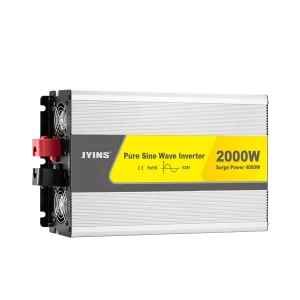
Total Harmonic Distortion (THD < 2%) protects sensitive PCB microcontrollers, medical refrigeration, and automated milling logic cards from voltage harmonics, thermal stress, and acoustic motor hum caused by modified sine wave degradation.
Heavy-duty toroidal transformer-based low-frequency inverters deliver up to 300% surge capacity for 10 seconds, making them ideal for heavy inductive starting currents in Chipata's cold storage compressors and agricultural pumps.
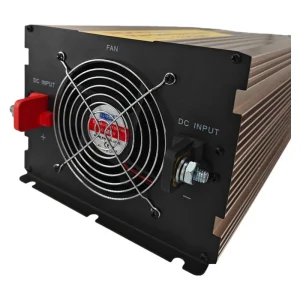
Built with anodized die-cast aluminum heat sinks, intelligent dual variable-speed cooling fans, anti-corrosion PCB conformal coating, and dust-resistant IP65 sealing to withstand tropical sub-Saharan summer spikes above 45°C.
| Parameter Standard | Industrial High-Frequency Inverters | Heavy Low-Frequency Inverters | Hybrid Solar C&I Storage Systems |
|---|---|---|---|
| Nominal Output Waveform | Pure Sine Wave (THD < 3%) | Pure Sine Wave (THD < 2%) | Pure Sine Wave (THD < 1.5%) |
| Peak Surge Rating | 200% (200ms) | 300% (10 Seconds) | 220% (5 Seconds) |
| DC Voltage Options | 12V / 24V / 48V Single Phase | 48V / 96V / 110V / 220V DC | 160V – 800V High Voltage DC |
| Target Chipata Application | Mobile Command, Telco, Light Off-Grid | Agricultural Grain Mills, Cold Storage | Enterprise Microgrids, Hospitals, Factories |
| MPPT Tracking Efficiency | 99.5% Efficiency | 99.0% Efficiency | 99.9% Dual-MPPT Efficiency |
Factory-direct high-capacity converting units optimized for solar microgrid integration across Eastern Zambia.
When deploying commercial energy storage systems in Chipata, standard standalone power inverters are integrated into multi-source microgrids featuring Solar PV inputs, lithium iron phosphate (LiFePO4) battery banks, grid AC pass-through, and emergency auxiliary diesel generators. Modern hybrid inverter topologies utilize high-speed digital signal processors (DSPs) to seamlessly orchestrate power flow based on dynamic tariff structures and solar availability.
Financial analysis conducted for commercial sites in Chipata indicates that converting from continuous diesel generator operation (costing upwards of $0.48/kWh including regional fuel freight margins) to a factory-direct hybrid solar inverter + lithium battery system drops the Levelized Cost of Energy (LCOE) to $0.112/kWh. This results in an average capital expenditure payback period of just 2.6 to 3.1 years, delivering guaranteed energy security over a 15-year operational lifespan.
End-to-end production integrity ensuring high MTBF (Mean Time Between Failures) for global exports.
Every exported unit undergoes rigorous full-load burn-in testing in thermal chambers at 50°C for 72 consecutive hours to eliminate early-life component mortality and guarantee operational stability.
Fully compliant with TUV Rheinland, IEC 62109-1/-2 safety standards, IEC 62040 UPS performance metrics, CEC Australia listing, CE marking, and RoHS material safety protocols.
Designed around self-developed multi-channel Smart Battery Management Systems (BMS) with RS485, CAN-Bus, and Modbus communication protocols for seamless lithium battery pairing.
Navigating the supply chain route into Chipata requires specialized exporting expertise. Equipment standardly originates at automated manufacturing plants in China, entering East African port gateways—primarily the Port of Nacala in Mozambique or the Port of Dar es Salaam in Tanzania—before transit via logistics corridors across the Mchinji or Mwami border posts directly into Chipata customs depots.
Key Clearance & Regulatory Requirements for Chipata Inverter Procurement:
Factory-direct models across single-phase, split-phase, and high-capacity three-phase hybrid architectures.
Changzhou HYBO New Energy Co., Ltd. specializes in the production, design, manufacturing and sales of lithium battery energy storage products. Starting from household energy storage, it gradually expands to the field of small industry and commerce and portable energy storage. It mainly develops and produces lithium-ion batteries for residential energy storage systems, small industrial and commercial energy storage systems.
Energy storage products relying on the company's proprietary advanced battery management system (BMS) and its Self-developed patented technology, have passed TUV, IEC, CEC and other international certifications.
Learn More About OEM SupplyThe products have been sold to the European Union, the United Kingdom, South Africa, Southeast Asia, Asia, Australia, New Zealand, Japan, the Middle East and other countries and regions, bringing customers a good experience and providing satisfactory solutions.

A portable power station makes it possible to capture and store electricity while camping, or away from grid electricity in general.
Installation and Maintenance;Construction and Extraction;Farming and Gardening;Community Service; Hospital Nursing;Transportation;Remote Office;Art and Media;Business
Emergency Preparedness; Backyard Maintenance; Daily Household; Health Care; DIY Room
Hiking;Camping;Off-grid living;Tailgate Party;Outdoor movie;RV life;Overlanding;Gatherings;Fishing
Before you buy a portable power station it is good to do some homework to figure out how many appliances you will want to power from the power station, how much power they draw, how long you plan to be off-grid, and how much sunshine you might get in order to re-charge while you are away from home. These questions will help you determine what outputs you need on a portable power station and how big of a battery you need.
Let us enjoy the life more comfortably:
We often worry about life without electricity, such as power cuts, outdoor away from the power source and so on. But as long as we have a portable power supply, these problems can be solved. This power station makes our life more convenient.
The power electronics industry is experiencing a generational shift in converter efficiency driven by third-generation wide-bandgap (WBG) semiconductors, AI-based energy forecasting, and microgrid swarm intelligence. Power inverter factories serving Chipata and sub-Saharan Africa are actively implementing the following engineering roadmaps:
Transitioning from traditional Silicon IGBTs to SiC MOSFETs reduces switching losses by up to 60%, allowing inverters to operate at higher switching frequencies while achieving over 99.0% peak efficiency and smaller magnetics footprints.
Next-generation hybrid inverters feature bi-directional Vehicle-to-Grid (V2G) capabilities, enabling commercial fleets in Chipata to serve as decentralized emergency battery reserves during catastrophic grid failures.
Expert technical answers addressing regional voltage instability, customs, and system design.